- Maker: Jamie Heising & Kayla McGee
- Genre: Project 3: Multi-Page Text
- Level: Graduate
- Program: Composition, Rhetoric, and Digital Media
- Course: WRIT 5800: Editing, Layout, and Design
- Instructor: Dr. Eric Mason
- Semester Created: Winter 2026
Description
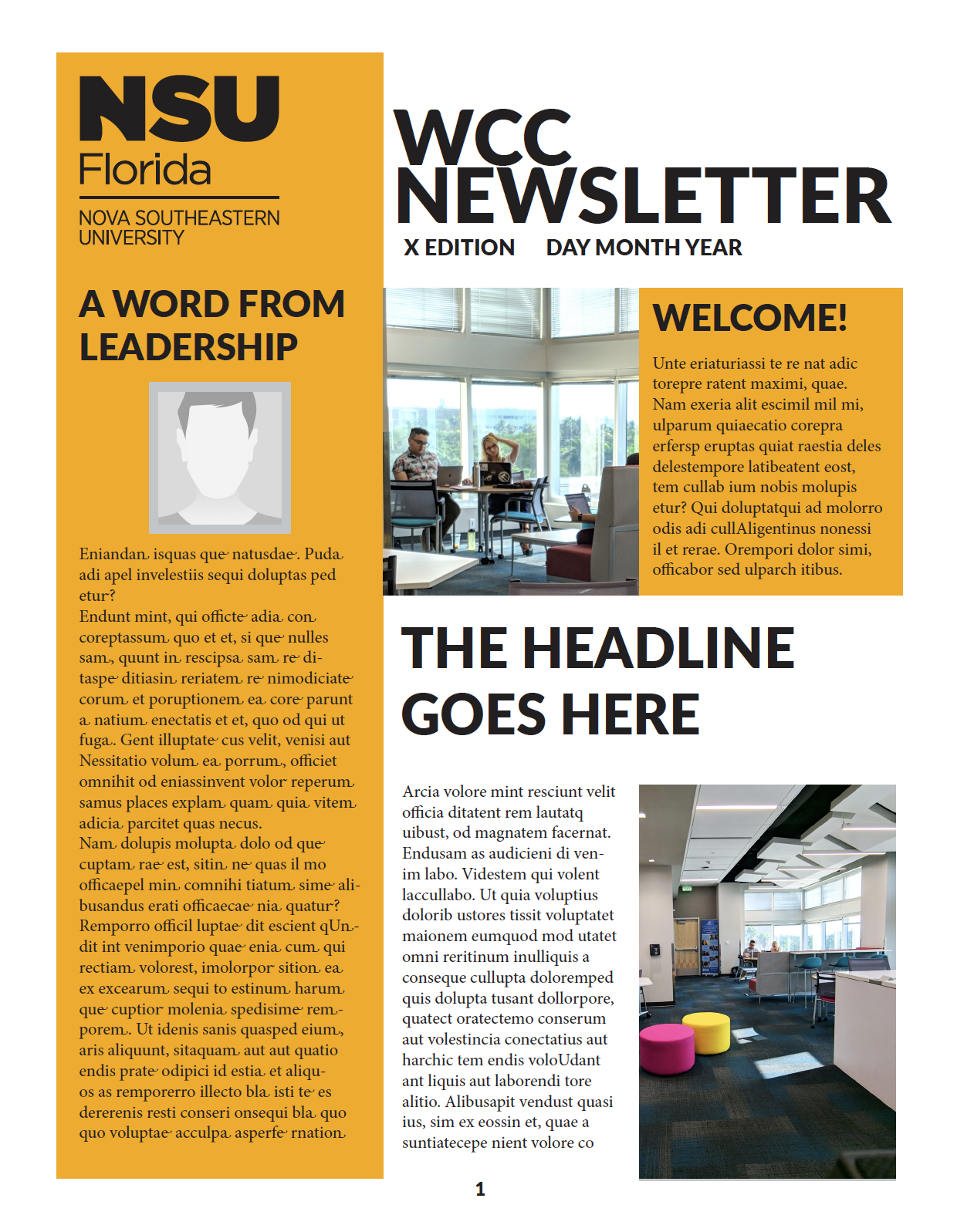
For project 3, we decided to make a newsletter for NSU’s PRSSA Chapter. We wanted to highlight both past events from this year and upcoming events for the next school year. We decided to use Canva to create our newsletter because it gave us the most freedom with both layout and style. In terms of what we wanted to include in the newsletter, we included some pieces about some events from this past year. We included events such as their Leadership Assembly Conference in New Orleans, as well as some of the events they had this year. They also had guest speakers this past year, and we’ve included a page in our newsletter about some of the guest speakers and what their roles are with their respective companies. The idea was for the newsletter to serve as a formal location where PRSSA could share news and updates on how events went and what members should do next. The current layout is more representative of what the chapter can do going forward, with sections like an introduction/greeting, locations to speak about events, highlights of speakers, and upcoming events.
Reflection
The design process affected us a great deal because we had to figure out where everything was going to go within the newsletter, and make sure it flowed and looked presentable. This design process differed from a typical writing assignment because we also had to take into account the design element of the project. We were most satisfied with how the finished project turned out and how it all came together.
The design thinking process influenced our approach to this project, even though it was not always at the forefront of our decision-making while working. In the empathize stage, we did not need to conduct extensive research or interviews with the client, as one member of our group, Kayla, serves as the president of the NSU PRSSA Chapter. Because of this role, we already had a strong understanding of the organization’s goals, audience, and expectations, which allowed us to move quickly into later stages of the process.
During the define stage, we focused on identifying the organization’s needs and challenges, such as determining what information should be included, how much content was appropriate for a newsletter format, and how to present updates in a way that was informative without being overwhelming. A major consideration was balancing length and clarity, ensuring the newsletter was concise enough to be read easily while still providing meaningful detail. We also discussed logistical questions, such as how frequently the newsletter should be distributed. After considering options like bi-weekly versus monthly distribution, we ultimately settled on a monthly format as the most realistic and effective approach.
The ideation and design stages involved experimenting with multiple layouts, color schemes, fonts, and visual arrangements. We shared mock-ups and different versions of the newsletter with one another, adjusting sections and visual hierarchy to improve flow and readability. Canva played a significant role in this stage, as it allowed us to easily test different design choices and collaborate efficiently. Rather than focusing heavily on generating new written content, much of our attention was directed toward how existing information could be formatted and visually emphasized through design.
The testing stage occurred through the creation of a pilot version of the newsletter, which was shared with a small group of PRSSA members to gather feedback. This allowed us to evaluate how the design functioned in practice and whether the layout, visuals, and information felt clear and engaging to readers. Reflecting on the project, we can see how the design thinking process naturally aligned with our workflow, even if it was not consciously followed step by step during production.
This process differed from a typical writing assignment in that the primary challenge was not content creation, but layout, formatting, and intentional visual organization. Because much of the information already existed, the task became one of modifying and remixing content to fit the newsletter format while prioritizing legibility and visual appeal. Working with a client also influenced our composition process, as we were required to follow both organizational and university branding guidelines, including specific colors and fonts, which limited some creative choices but ensured consistency and professionalism.