- Maker: Kayla McGee
- Genre: Project 2b – Compose and Edit Audio
- Level: Graduate
- Program: Composition, Rhetoric, and Digital Media
- Course: WRIT 5800: Editing, Layout, and Design
- Instructor: Dr. Eric Mason
- Semester Created: Winter 2026
Description
This project originated from an interest in the common audio trends found on Bookstagram and BookTok, where specific sound clips and songs are repeatedly used to convey mood, narrative, or emotion while accompanied by a video edit. The original idea was to create an audio soundscape using repeated quotes or spoken clips to form an auditory storyline, similar to an internal monologue or narrative arc. However, as the project developed, the concept shifted toward remixing popular songs commonly used within these spaces to create a music remix that reflects the culture and rhythm of book-related social media.
The final piece is a layered remix composed of multiple recognizable audio clips and songs, woven together into a single auditory experience. The process involved actively listening to and identifying frequently used sounds, isolating key moments from each track, and experimenting with how they intersect rhythmically and tonally. Through cutting, overlaying, and sequencing these clips, the work emphasizes transitions between familiar sounds, creating cohesion while maintaining the individuality of each source.
This approach highlights how repeated audio trends contribute to shared storytelling within online book communities. All songs and audio clips included are credited to their respective artists, and the creator owns no copyrighted material used in this soundscape.
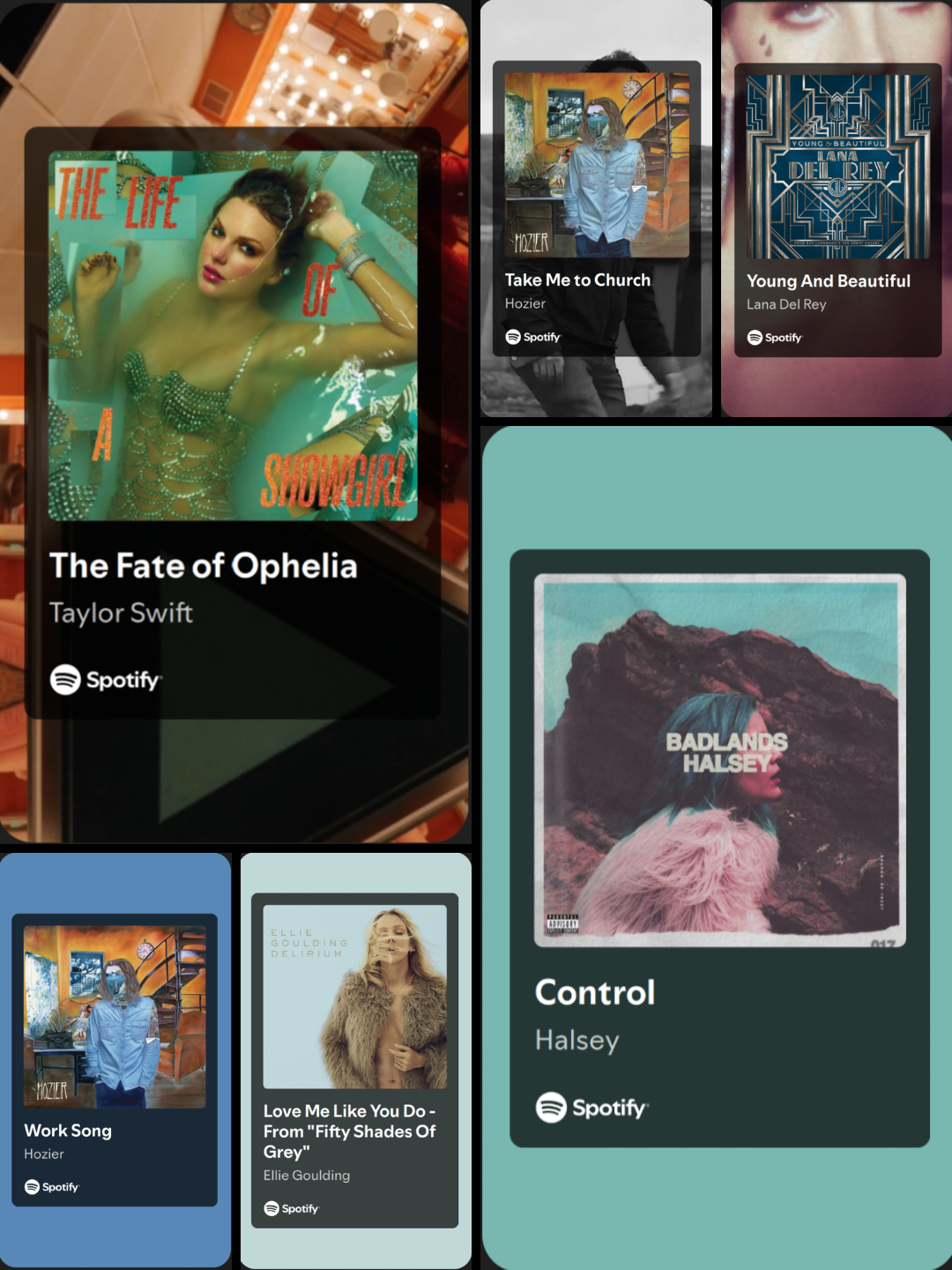
Ocean Eyes – Billie Eilish
The Fate of Ophelia – Taylor Swift
Work Song – Hozier
Control – Halsey
Take Me to Church – Hozier
Young and Beautiful – Lana del Ray
Love me Like you do – Ellie Goulding
Reflection
The design thinking process influenced this project in a nontraditional way. Rather than following a linear or structured sequence, I began with ideation and moved quickly into production. As I worked, I continuously adjusted the project based on the requirements and my own creative goals. Instead of fully planning before execution, my process involved experimenting, revising, and reshaping the work as it developed. Throughout the production process, I frequently revisited and reworked the piece. If something was not working, whether conceptually or technically, I would redo it and try a different approach. At times, this meant going through various ideas or versions before arriving at something I felt satisfied with. This iterative cycle allowed me to adapt the project to my skills and capabilities while still pushing myself creatively.
Compared to a traditional writing assignment, this process was much more fluid and experimental. There were moments where I discovered elements that worked well and kept them, then built new variations or adaptations around those choices. This made the process feel less rigid and more exploratory.
The concept of remix strongly informed my approach. I was interested in how pre-existing materials could be transformed and recontextualized into something new. By taking familiar elements and reworking them into different versions, the project emphasizes how meaning can shift through recombination and reinterpretation. Rather than creating something entirely original from scratch, the focus became representative of how existing materials can be layered and reshaped to express new ideas.
Overall, I was most satisfied with the flexibility of the process and the ability to continuously revise until the final product felt complete. While the constant changes were sometimes challenging, they ultimately contributed to a stronger and more intentional final piece.